
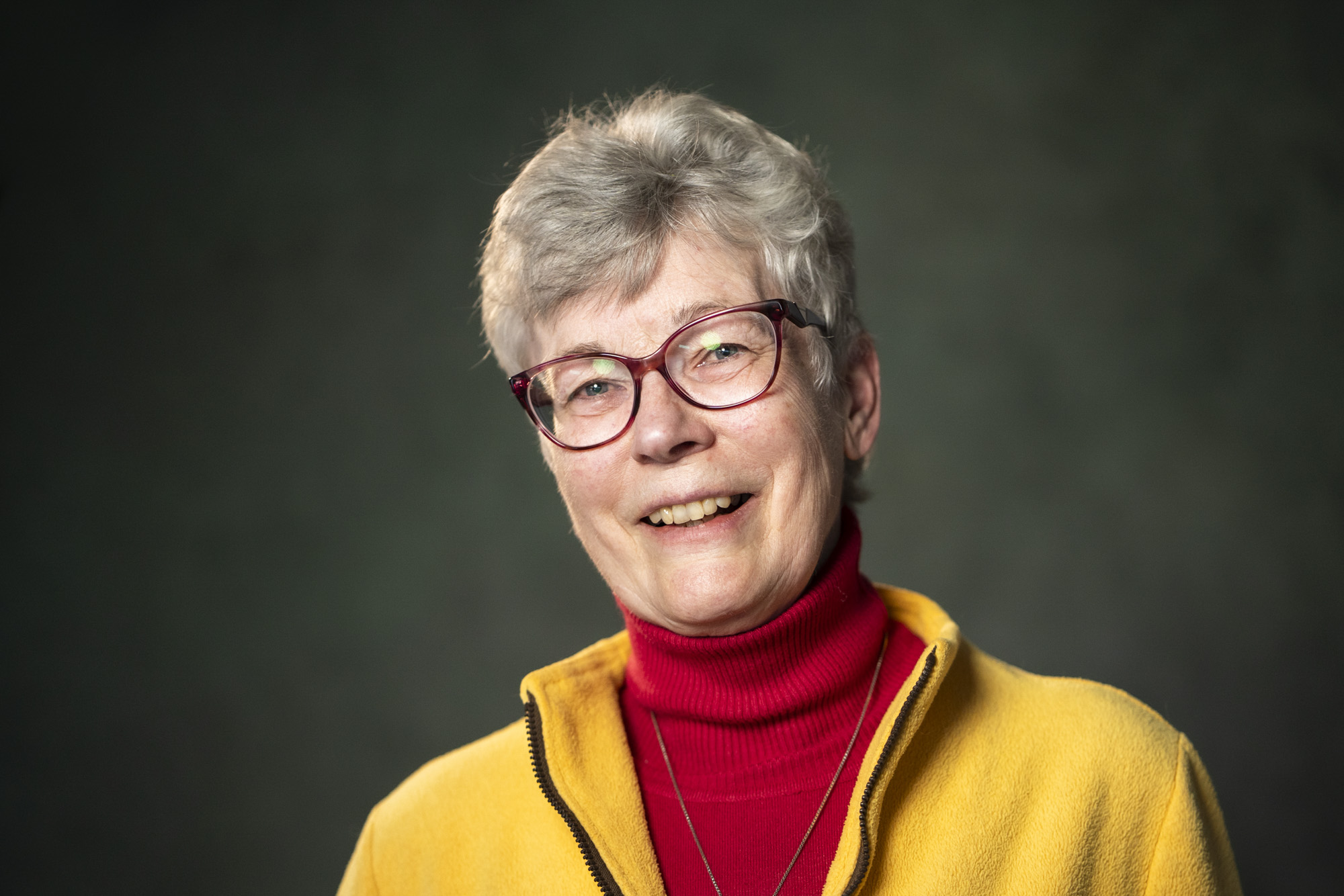
“You just have to seek out contact with other people, and the library is a great place to do that,” says Trudy. She is an active volunteer at the library in Rozenburg. “I do such fun things here! And I get something back in return, too, don’t I?” She was born in Schiebroek, but has lived here since she was young. “When I was a child, my father got a job in Dordrecht, so we moved there. But we always kept our connections with Rotterdam, for my grandparents and to do our shopping. We always went to the Brielse Maas, which is known for water sports. My parents had a boat and we always sailed to the Rozenburg marina for six weeks in the summer.”
She met her current husband at that marina. “He had been living in Rozenburg since he was 12. When I was 18, I went to study nursing in Rotterdam and lived in a room in the nurses’ home. That’s a kind of house where all the students can live. Very convenient and safe; they should never have abolished it. But anyway, it was a small room, so I wanted to move out.” So she packed her things and moved in with her current husband in 1977. And she never left.
From a separate village to a multicultural neighborhood
Yet Rozenburg is very different now than it used to be. It was a separate village, detached from Rotterdam. “And half the size it is now. Since it became part of Rotterdam, more and more houses and people have been moving in. Because people can’t get any closer to the center.”
This also brings more people from different backgrounds. Trudy sees this as partly positive. “We have a Turkish neighbor with a large family. That man is so sweet and friendly! And his wife too, right?”
But Trudy also sees the negative aspects that this brings. “For example, the houses that become available are often filled with Eastern Europeans who then work in Botlek, Europoort, and Maasvlakte. It doesn’t bother us, but you wouldn’t want to live like that, would you? But then again, they can afford it. I think it’s crowded enough as it is. But the work has to be done because a lot of Dutch people don’t want to do the dirty and unpleasant jobs anymore. And the Eastern Europeans have to live somewhere too. So I just accept it. As long as you are considerate of others, that’s the most important thing in my opinion.”
Seeking contact
However, not everyone finds it so easy to be open to others and accept all the new population groups in Rozenburg. But Trudy has the ultimate tip for that. “Yes, you just have to seek contact with other people. The library is a great place to do that, because that’s where we all come together: all nationalities. You can be creative with kids or learn Dutch here.”
Rotterdammer
Trudy is not only devoted to ‘her’ library in Rozenburg, but also to the Landtong. “It’s a beautiful piece of nature. Many Rozenburg residents enjoy walking and cycling there. However, the municipality wants to install a mega wind turbine here. We don’t want that.” All these developments came about mainly because Rozenburg became part of Rotterdam. Although she is not always happy with these developments, she does feel like a true Rotterdammer. “I was born here, just like my parents and grandparents. I am also a hard worker and a go–getter. And I am open to others. I think that’s really Rotterdam.”