
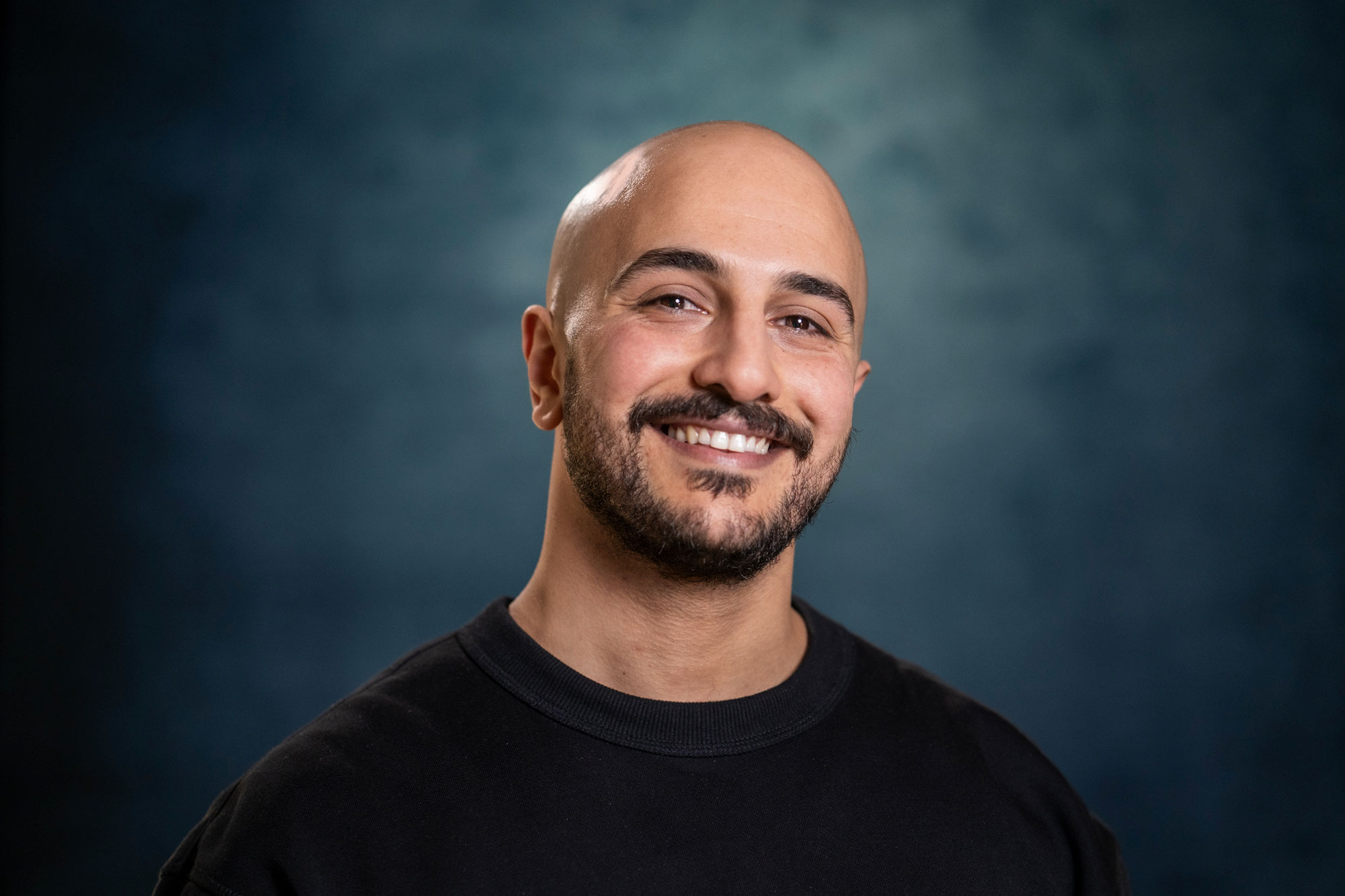
“In Rotterdam i belong, something I never felt in Tunisia,” says Beshir. “It never really felt like my country. But my professor at the university where I studied said, ‘I see you in the Netherlands: you work in architecture and your lifestyle is already Dutch; you do everything by bike.’ I was surprised; I had never thought about the country. The Netherlands isn’t very well known in Tunisia, except for Amsterdam, of course. We don’t even have a direct flight between the Netherlands and Tunisia. Even though there are about 24,000 Tunisians living in the Netherlands.”
While he was thinking about where he wanted to end up, he applied to architecture firms in various countries, from China to Australia. “But the firm in Rotterdam hired me,” Beshir says happily. In 2023, he arrived in The Hague. “That first day I rode in on the bus was truly a beautiful day. I thought: wow!”
Although he worked in the Netherlands, he didn’t get to know the country well. “Because I worked for an international company.” Until he met his wife: she was an elementary school teacher and lived in Rotterdam. That’s how Beshir came to live in this city as well. “And I’ve never regretted it. I love seeing how this city rose from the ashes after World War II. That image gave me a lot of strength and hope. It motivated me to keep going and build a life for myself.” And that’s exactly what he did.
A paradise for architects
He got to know the city well, neighborhood by neighborhood. “I’d hop on my bike, put on my headphones, and set out to explore the city. Rotterdam is big. I like the city: the mix of old and new architecture and green spaces. The architecture here is truly a paradise for architects: different styles of architecture, how people come together in public spaces. It’s important to view that within the context of the city’s development. Because this city was once bombed, there’s a lot of experimental architecture here; here are the tallest buildings in the Netherlands, and the Markthal. I really like that.”
Diversity
In addition to the architecture, he also really likes the city’s diversity. “When you go outside, you see different nationalities and cultures and you feel that together you are Rotterdam. Everyone contributes to Rotterdam’s culture based on their own culture or nationality. That’s how the culture here takes on different facets. I like that.” He sees the many migrants in the city as a strength. “The city of Rotterdam was rebuilt by migrants after the bombing. That makes diversity a strong point of Rotterdam. I think Rotterdammers should also think more deeply about this.”
Integrating through language
In addition to the city’s history, he also wanted to learn the language. “If you want to integrate, you have to. And to do that, you have to speak it. But in Rotterdam, everyone speaks English.
“That’s handy for expats who just want to stay here for a while, but if you want to stay longer, you have to learn to speak it. So I’m learning it. I hope I can do the next interview in Dutch,” Beshir laughs.
Friends
It also helps to have friends. And it’s not always easy to meet new people when you move here as a working professional. “When you’re a bit older, you often form more superficial friendships than when you arrive in a city as a student. You tend to stick to your own community—that’s easy—but it’s better to have Dutch friends too. I have Tunisian friends, but I also want to be part of Dutch society.” Fortunately, Beshir sees plenty of opportunities in the city to meet new people. “For example, there are many events in the city where you can meet people, such as the film festival, summer carnival, or small concerts and parties. But you shouldn’t be shy!”
He followed his own advice and that’s how he discovered a fun Dutch tradition: birthdays. “I really like those. How people sing for each other… and that people here also congratulate the family members or friends of the birthday person!”
Maintaining your own identity
According to Beshir, immersing yourself in the culture doesn’t mean you have to completely set aside your own identity. “When you live abroad, you don’t belong anywhere. You don’t belong to the country where you were born, but here you’ll never be 100% Dutch either. Not even if you have a passport and speak Dutch. So it’s better to hold on to your own identity. That’s why Maxima also said she didn’t believe in a Dutch identity; she felt that way too.”
Ups and downs
Now he feels at home in Rotterdam. And even though his first experience in Rotterdam was positive, that’s not something to take for granted. “Because feeling at home is just like love: you have to build it. The first time I came here, I was pleasantly surprised, but I’ve also felt sad at times. So there are ups and downs; but I want to feel those too. As long as you invest. And I do that here, because I get something in return. Rotterdam really gives you the chance to work on your dreams and make them come true. That goes for everyone: people who come here for a few years or longer.”
Beshir could easily have been among those who stayed for only a short time. He actually received an offer to work in China. “But I chose to stay here. Because I feel that I belong here. I wish Tunisia had given me that feeling.”